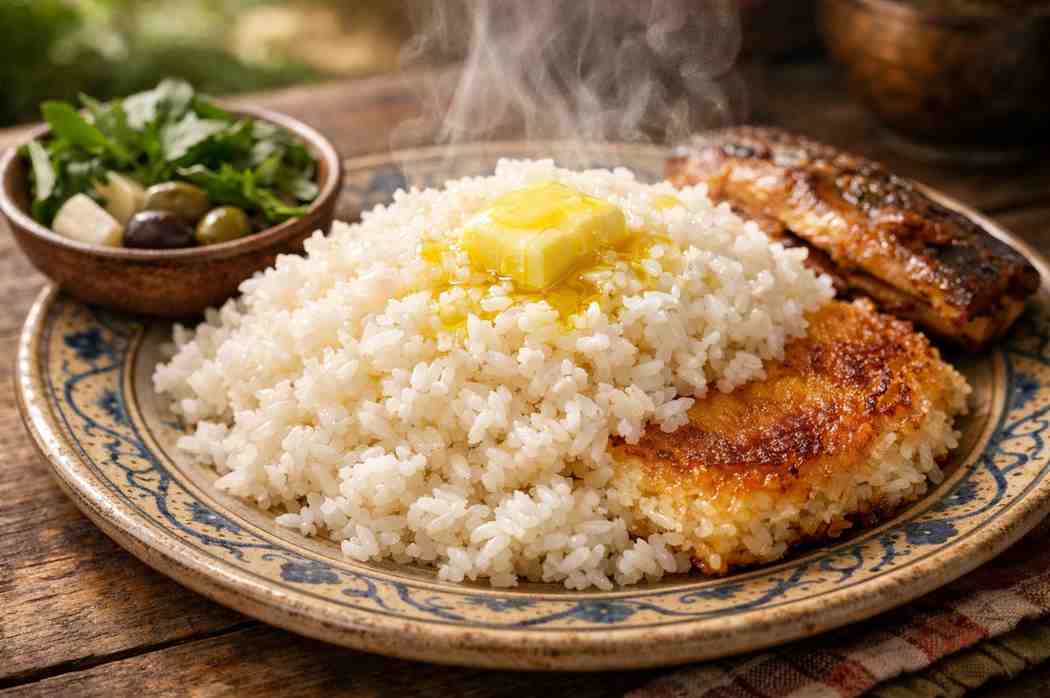
In the lush, green province of Gilan Province, where the Caspian Sea meets fertile rice fields and misty forests, food is deeply connected to nature. Among its most beloved staples is Kateh—a humble yet deeply satisfying way of cooking rice that embodies simplicity, nourishment, and tradition.
What is Kateh?
Kateh is a traditional style of cooking rice from northern Iran, especially in Gilan. Unlike the more elaborate Persian rice dishes that involve parboiling and steaming, Kateh is prepared by cooking rice directly in water until it is fully absorbed, similar to how many cultures cook everyday rice.
The result? Soft, slightly sticky rice with a rich, comforting texture—often finished with a golden crust at the bottom known as tahdig, a prized delicacy in Iranian cuisine.
A Dish Born from Nature
The cuisine of Gilan is shaped by its environment—abundant rainfall, fertile soil, and proximity to the sea. Rice is a staple crop here, and Kateh reflects a practical, no-waste approach to cooking.
Unlike the refined and ceremonial rice dishes of cities like Tehran, Kateh is rustic and everyday. It’s the kind of meal you’d find in a countryside home, served fresh with local herbs, fish, or pickles.
Ingredients: Simplicity at Its Best
One of Kateh’s greatest strengths is its simplicity. You only need a few ingredients:
- Rice (preferably short- or medium-grain Iranian rice)
- Water
- Salt
- Butter or oil (optional, but recommended)
How Kateh is Made
The preparation of Kateh is simple but requires attention:
- Rinse the rice to remove excess starch
- Combine rice, water, and salt in a pot
- Cook over medium heat until the water is absorbed
- Lower the heat and cover the pot
- Let it steam gently, forming a crispy layer (tahdig) at the bottom
The beauty of Kateh lies in its forgiving nature—it’s easier to prepare than many other Persian rice styles, making it perfect for daily meals.
Texture and Flavor
Kateh has a unique texture that sets it apart:
- Soft and moist grains
- Slight stickiness (similar to some East Asian rice dishes)
- A rich, buttery aroma if oil or butter is used
- A crispy, golden tahdig layer that adds contrast
It’s comfort food in the truest sense—warm, filling, and deeply satisfying.
What is Tahdig?
No discussion of Kateh is complete without mentioning tahdig, the crispy layer of rice that forms at the bottom of the pot.
- Golden and crunchy
- Slightly nutty in flavor
- Often the most fought-over part of the dish!
In some variations, cooks enhance tahdig with ingredients like potatoes, bread, or yogurt—but in Kateh, it’s usually just pure rice, perfectly crisped.
How Kateh is Served
Kateh is incredibly versatile and is often paired with a variety of dishes, such as:
- Grilled or fried fish (common in Gilan due to proximity to the sea)
- Herb stews and vegetable dishes
- Pickled vegetables and fresh greens
- Yogurt-based sides
A classic pairing might include Kateh with fresh herbs and fish from the Caspian Sea, creating a meal that’s both balanced and rooted in local tradition.
Kateh vs. Other Persian Rice Styles
Iranian cuisine is famous for its rice, and Kateh is just one of several methods:
- Chelow: Fluffy, separate grains, often served with kebabs
- Polo: Rice cooked with herbs, vegetables, or meat
- Kateh: Simple, sticky, and rustic
While Chelow and Polo are often associated with formal meals, Kateh is all about everyday comfort.
Cultural Significance
Kateh represents more than just a cooking method—it reflects a lifestyle. In Gilan:
- Meals are closely tied to the land
- Cooking is practical and resourceful
- Food is meant to nourish both body and soul
Kateh is often the centerpiece of family meals, bringing people together around a shared table.
Why You Should Try Kateh
If you’re exploring global cuisines, Kateh offers a refreshing perspective on rice:
- It’s easy to make
- Requires minimal ingredients
- Delivers maximum comfort
- Showcases the beauty of simplicity
It’s a reminder that great food doesn’t always need complexity—sometimes, the simplest dishes are the most memorable.
Final Thoughts
From the misty landscapes of Gilan Province comes a dish that celebrates humility and flavor. Kateh may not be flashy, but it carries the warmth of home, the richness of tradition, and the essence of northern Iranian life.
In every spoonful, you’ll find a story of land, culture, and comfort—proof that even the simplest bowl of rice can be extraordinary.