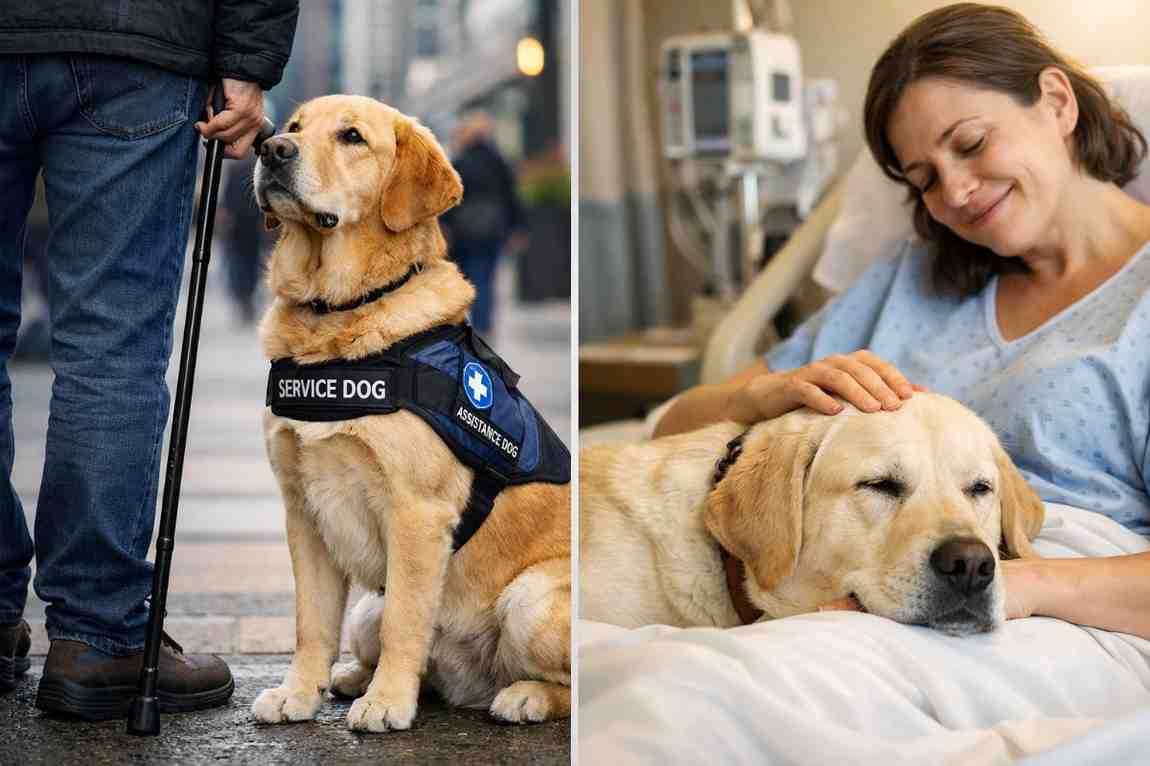
Animals have long been cherished for their companionship, but some go far beyond that role—providing essential support, comfort, and independence to people in need. Service and therapy animals represent a powerful intersection of compassion and capability, transforming lives in ways both practical and emotional.
What Are Service & Therapy Animals?
While often grouped together, service animals and therapy animals serve different purposes:
Service Animals
Service animals are specially trained to perform specific tasks for individuals with disabilities. These tasks are directly related to the person’s condition and help them navigate daily life more independently.
Therapy Animals
Therapy animals, on the other hand, provide emotional support and comfort to people in hospitals, schools, nursing homes, and disaster areas. They are not limited to one individual but work with many people.
Both play vital roles, but their training, responsibilities, and legal status differ significantly.
Service Animals: Independence and Assistance
Service animals are most commonly dogs, though in some cases miniature horses are also used. They are trained to assist with a wide range of needs, including:
- Guiding individuals with visual impairments
- Alerting those with hearing loss
- Assisting people with mobility challenges
- Detecting medical conditions like seizures or low blood sugar
- Providing support for individuals with PTSD
Organizations like Guide Dogs for the Blind train highly skilled service animals that can make life-changing differences.
Therapy Animals: Healing Through Comfort
Therapy animals focus on emotional well-being. They are often brought into environments where people may be experiencing stress, loneliness, or trauma.
They are commonly found in:
- Hospitals
- Rehabilitation centers
- Schools and universities
- Disaster relief areas
Programs run by groups such as Pet Partners help connect trained animals with those in need of comfort and companionship.
Emotional Support Animals (ESAs)
A related category is Emotional Support Animals (ESAs). Unlike service animals, ESAs are not trained to perform specific tasks but provide comfort simply through their presence.
They are often prescribed by mental health professionals for individuals dealing with anxiety, depression, or other emotional conditions.
The Science Behind Animal Assistance
The benefits of interacting with animals are supported by research in psychology and health sciences. Studies show that animals can:
- Reduce stress and anxiety
- Lower blood pressure
- Improve mood
- Encourage social interaction
This is often referred to as the “human-animal bond,” a powerful connection that enhances well-being.
Training and Certification
Service Animals
- Undergo extensive, specialized training
- Learn to perform precise tasks
- Must remain calm and focused in public
Therapy Animals
- Trained for good behavior and temperament
- Evaluated for their ability to interact safely with people
- Certified by recognized organizations
Training ensures that these animals can perform their roles safely and effectively.
Legal Rights and Access
Service animals are granted legal protections in many countries, allowing them to:
- Enter public spaces
- Travel with their handlers
- Live in housing that might otherwise restrict pets
Therapy animals and ESAs, however, typically do not have the same level of legal access.
Common Types of Service & Therapy Animals
While dogs are the most common, other animals can also play supportive roles:
- Dogs (most widely used)
- Cats (common in therapy settings)
- Horses (miniature horses for mobility support)
- Rabbits and birds (occasionally used in therapy programs)
Each animal is selected based on temperament, trainability, and suitability for specific tasks.
Real-Life Impact
The presence of service and therapy animals can be life-changing:
- A guide dog enabling someone to navigate the world independently
- A therapy dog comforting a child in a hospital
- An emotional support animal helping someone cope with anxiety
These stories highlight the profound difference animals can make in human lives.
Challenges and Misconceptions
Despite their importance, service and therapy animals face challenges:
- Misrepresentation of pets as service animals
- Lack of public awareness about proper etiquette
- Access issues in certain places
Education and awareness are key to ensuring these animals are respected and supported.
How to Interact Respectfully
When encountering a service or therapy animal:
- Do not distract or pet without permission
- Respect the handler’s space
- Understand that the animal is working
These simple actions help maintain the effectiveness of their role.
Why They Matter
Service and therapy animals represent more than assistance—they symbolize:
- Independence for individuals with disabilities
- Emotional healing for those in distress
- The extraordinary bond between humans and animals
Final Thoughts
Service & Therapy Animals are true heroes in their own quiet way. Through training, dedication, and natural empathy, they provide support that technology alone cannot replicate.
As awareness grows, so does appreciation for these remarkable animals—companions who not only share our lives but actively improve them.